Tribo-electrostatic Separation (TES)
Dry fractionation route leveraging surface charging for high-purity protein concentrates.
Research
More than two million tonnes of lentils are produced on average each year in Canada, the world’s biggest producer, with the majority produced in Saskatchewan. Lentils are harvested, cleaned, and graded before packaging or further processing. Most are cooked and consumed as a whole grain, but a growing volume of lentils is dried and turned into a powder to isolate proteins from starches and used as a food additive.
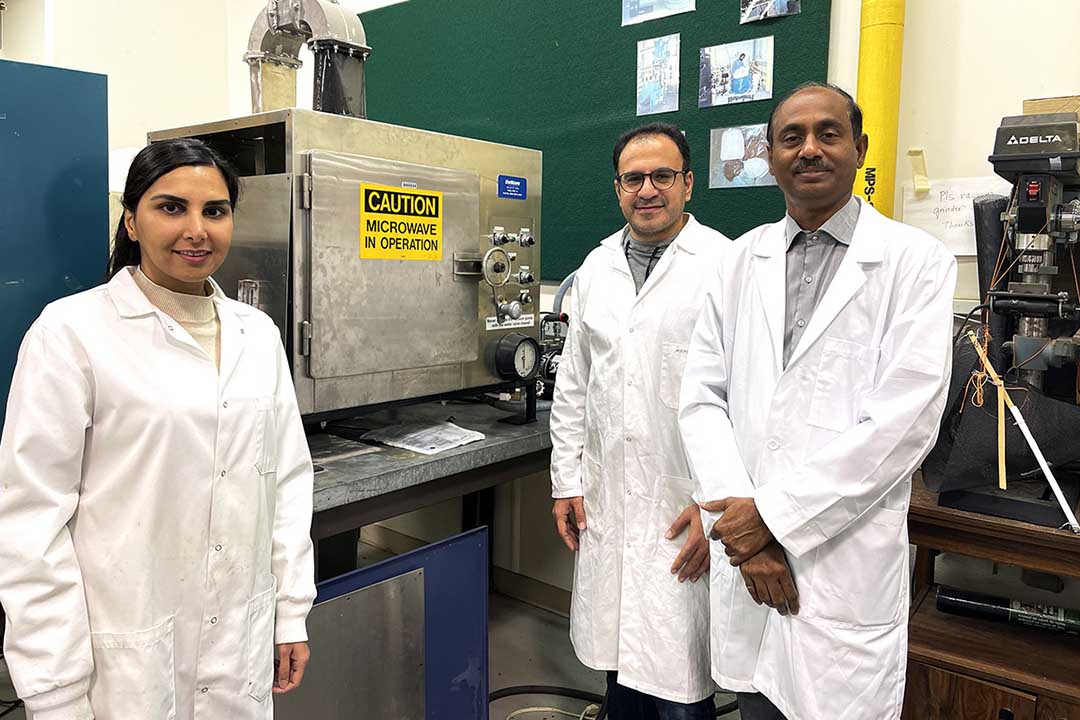
Processing red lentils with a specialized combination infrared microwave system—a countertop device that allows heating by microwave and radiant heat simultaneously—the USask research team was able to substantially improve how easily these lentils could be digested.
“The process makes these macromolecules—starch and protein—more accessible to enzymes in our bodies,” said Dr. Mehdi Foroushani (PhD), USask research engineer and first author on the study published in the journal Food Chemistry Advances.
“Modified lentil flour can be a great source of plant-based ingredients for our dietary and nutritional needs, and our kitchen and food processing operations,” said Meda. “Lentil flour serves as an additive or substitution to our food system to not only make the food nutritious but also preserve its acceptable texture.”
The CLS’s mid-infrared beamline allowed them to see how variations in the time and power of microwave processing changed the structure of the starch and proteins in various preparations of lentils, from full seeds to milled flour. This is important because these changes to starch and protein can affect how stable the lentils or ingredients are on the shelf long-term, and what kinds of foods they can be processed into. By including these variables in the algorithm, lentil processors will be able to optimize the power levels and cooking times to get the result they want as quickly and efficiently as possible.
Dry fractionation route leveraging surface charging for high-purity protein concentrates.
Cost, sensitivity, and carbon-footprint modeling to guide decision-making.
Energy-aware operations, throughput optimization, and quality preservation.